How to Analyze a Company Before Investing
A structured way to evaluate a company’s business, numbers, and competitive position before you decide whether it deserves a place in your portfolio.
Analyzing a company properly means looking past the stock price and into the business generating it. Two companies can trade at similar prices and be in completely different financial condition — one steadily compounding profit, the other propped up by debt and optimistic guidance. This guide lays out a clear, repeatable framework for analyzing a company before investing, covering the business itself, its financial statements, its competitive position, and how to think about what you’re actually paying for.
None of this requires a finance degree. It requires patience, a willingness to read past the headline numbers, and a consistent process you apply to every company you consider — not just the ones a friend or a headline happened to mention this week.
01Understand What the Company Actually Does
Before looking at a single number, be able to explain the business in plain terms: what it sells, who buys it, and why those customers keep coming back. This is the foundation everything else builds on — financial ratios mean little if you don’t understand the underlying operation producing them.
A useful test is to try summarizing the business in two or three sentences without using jargon. If you find yourself relying on vague phrases like “innovative solutions” or “market leader” without being able to say specifically what problem the company solves, that’s a sign you need to dig further before moving on to the numbers.
Identify the Core Product or Service
Some companies sell one clear thing; others operate several distinct business lines. Know which segment actually drives revenue and profit, since a company can carry a well-known name in one area while quietly earning most of its money somewhere else entirely.
Understand the Customer Base
Is the company selling to individual consumers, other businesses, or governments? Each customer type behaves differently — consumer demand can shift quickly with trends, while business and government contracts tend to be slower moving but more predictable once secured.
02Read the Financial Statements
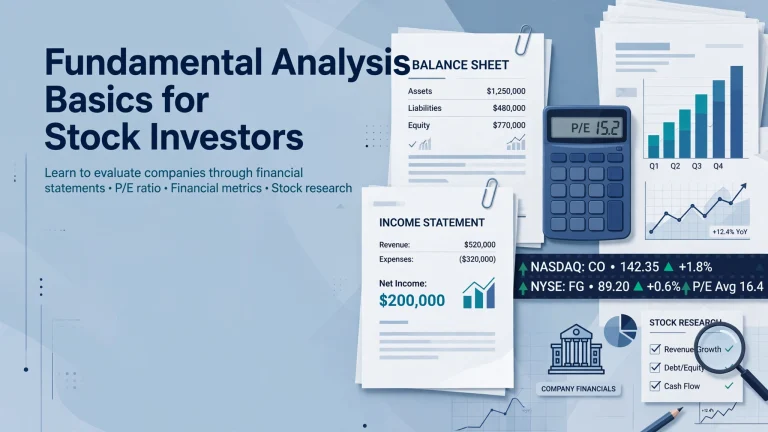
Once you understand the business, the financial statements confirm whether it’s actually performing well. Three statements matter most, and each tells a different part of the story.
These statements are typically published quarterly and annually, and comparing several periods side by side — rather than looking at just the most recent one — reveals trends that a single snapshot can easily hide, such as a slowly declining margin or a debt load creeping upward over several years.
Income Statement: Is It Actually Profitable?
Look for consistent revenue growth and stable or expanding profit margins. A company growing revenue while margins shrink may be buying growth at the expense of profitability — worth investigating rather than assuming it’s automatically a good sign.
Balance Sheet: How Is It Financed?
Check total debt relative to equity, and whether cash on hand comfortably covers short-term obligations. Debt itself isn’t a red flag — many strong businesses use it productively — but debt that outpaces the company’s ability to generate cash is a genuine warning sign.
Cash Flow Statement: Where Does the Cash Go?
Profit reported on the income statement can be adjusted by accounting choices; cash flow is harder to disguise. Consistently positive operating cash flow, and a sensible balance between reinvestment, debt repayment, and shareholder returns, is one of the clearest signs of a well-run company.
| Statement | Core Question It Answers | Watch For |
|---|---|---|
| Income Statement | Is the business profitable? | Margin trend over time |
| Balance Sheet | How is it financed? | Debt vs. cash and equity |
| Cash Flow Statement | Where does the cash actually go? | Consistent operating cash flow |
03Assess the Competitive Position
A company can look financially sound today and still be vulnerable if it has no real defense against competitors. This is often the hardest part of analysis, because it requires judgment rather than a formula.
Financial statements describe what has already happened; competitive position helps you judge whether those results are likely to continue. A company with strong current numbers but no real defense against competitors can see its advantage erode quickly once rivals notice the profit opportunity and respond.
Look for a Durable Advantage
Ask what stops a competitor from simply copying the business. Strong brand loyalty, proprietary technology, high switching costs, or a genuine cost advantage all make a business harder to displace. Without something like this, sustained profitability tends to attract competition that erodes margins over time.
Study the Industry Structure
A great company in a structurally difficult industry — one with low barriers to entry, thin margins, or intense price competition — can still struggle regardless of how well it’s run individually. Understanding the industry helps set realistic expectations for the company operating within it.
04Evaluate Management
Numbers reflect past decisions; management shapes future ones. Look at how long the current leadership team has been in place and whether their track record through past industry cycles inspires confidence. Meaningful insider ownership is also worth checking — when leadership holds a real stake in the company, their incentives are more closely aligned with shareholders.
It’s also worth watching how management communicates during difficult periods. Leadership teams that acknowledge setbacks directly and explain a clear plan tend to be more trustworthy over time than those that consistently attribute every disappointment to factors outside their control.
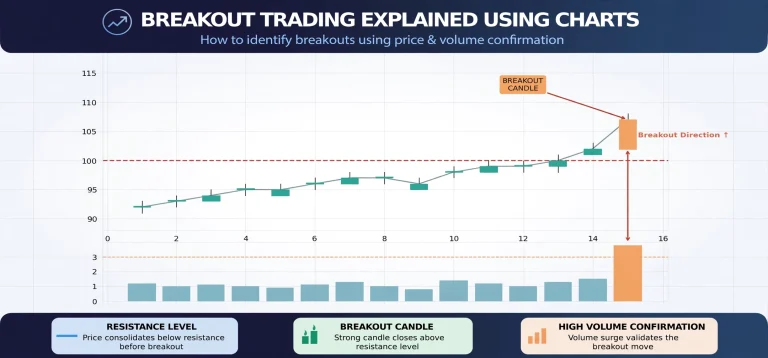
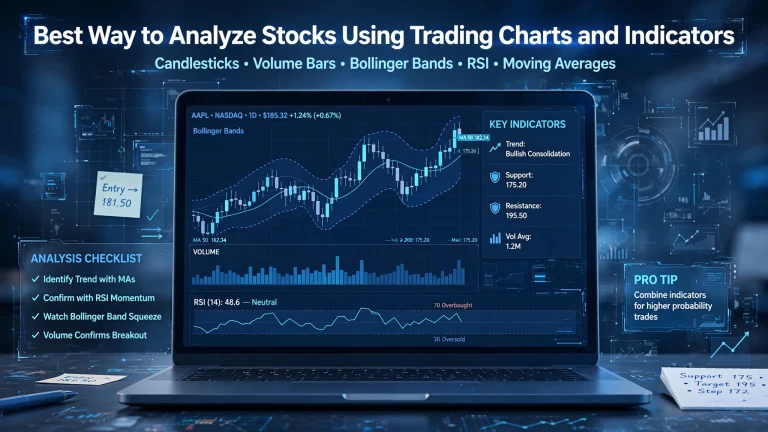
05Bring in Price Chart Context
A sound business doesn’t automatically mean a good entry point. Once you’re confident in the fundamentals, it helps to check where the stock currently sits relative to its recent trend before deciding on timing. Understanding basic trend structure — using tools like trend lines in trading — can help you avoid buying into an extended rally or a downtrend that hasn’t shown signs of stabilizing.
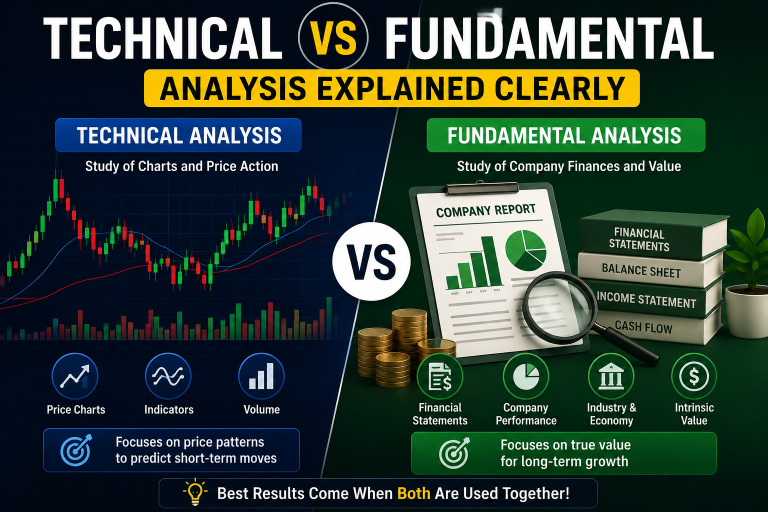
This step doesn’t replace fundamental analysis; it simply adds context. A fundamentally strong company bought at a stretched, overextended price can still result in an uncomfortable wait before the investment works out, even if the long-term thesis proves correct. Patience around entry timing costs nothing and often improves the outcome of an otherwise sound decision.
06Think About Valuation
Even an excellent business can be a poor investment if the price already reflects — or overshoots — years of future growth. Compare valuation multiples like price-to-earnings against the company’s own history and its closest industry peers, rather than judging the number in isolation.
A consistently higher valuation than peers isn’t automatically wrong; it may reflect genuinely superior growth or margins. The goal isn’t to find the cheapest number on the screen, but to judge whether the price is reasonable given everything else you’ve learned about the business.
It also helps to ask what has to go right for the current valuation to make sense. If the price already assumes years of flawless execution and rapid growth, even small disappointments can trigger a sharp reaction — while a more conservatively priced stock has more room to absorb the occasional setback without a dramatic sell-off.
07Manage the Risk of Being Wrong
No amount of analysis eliminates uncertainty entirely. Even thorough research can turn out to be wrong, which is why position sizing matters as much as the analysis itself. Before committing capital, decide how much of your portfolio you’re willing to allocate and where you would exit if the thesis breaks down.
Running the numbers through a dedicated tool removes the guesswork from this step. Our Risk Reward Calculator can help you evaluate whether a potential trade’s upside justifies the downside before you commit capital, regardless of how confident the fundamental analysis makes you feel.
08Verify With Primary Sources
Secondhand commentary — news summaries, forum posts, social media threads — can distort a company’s actual situation. Whenever a claim about a company’s financials or disclosures matters to your decision, check it against the original source rather than relying on someone else’s interpretation.
This step becomes especially important around earnings season, when headlines are often written for attention rather than accuracy. A single sentence pulled out of context can make a solid quarter sound alarming, or an average one sound spectacular — reading the actual filing removes that distortion.
In the United States, official company filings are publicly available through the SEC’s EDGAR full-text search, and general investor education material can be found through Investor.gov. These government resources exist specifically to give investors direct access to accurate information, independent of any single broker or platform.
09Common Mistakes That Undermine Good Analysis
- Analyzing the stock price instead of the business. A falling price alone doesn’t mean a company is cheap, and a rising price doesn’t mean it’s expensive — the business fundamentals decide that.
- Ignoring debt trends. A company can post strong headline growth while quietly building an unsustainable debt load.
- Treating one strong quarter as a trend. A single good or bad quarter rarely tells the full story — look at performance across several periods.
- Skipping the competitive analysis. Strong current numbers don’t guarantee a company can defend its position as competitors respond.
- Confusing conviction with certainty. Even solid analysis warrants a risk plan, since no single research process guarantees a correct outcome every time.
10Putting the Framework Together
Analyzing a company properly means moving through layers — the business model, the financial statements, the competitive position, management quality, valuation, and finally the price chart and your own risk tolerance. Skipping any single layer leaves a blind spot that tends to surface at the worst possible time.
None of these layers replace the others. A great business at a poor price, a cheap stock with a broken business model, and a sound company bought with no risk plan can all lead to the same disappointing outcome. Working through the full framework, every time, is what separates deliberate investing from guessing with extra steps.
To apply this framework in practice, review how trend lines in trading can help you judge entry timing, and use the Risk Reward Calculator to size your position before you invest.