
How Institutional Investors Analyze the Stock Market
Pension funds, hedge funds, and asset managers move markets every day. Here’s the exact research process — from macro to models to execution — they use before they ever buy a single share.
Institutional investors — pension funds, mutual funds, hedge funds, insurance companies, and sovereign wealth funds — control the vast majority of daily trading volume in global equity markets. Unlike retail traders who often react to headlines or short-term price swings, institutions rely on structured, multi-layered research processes before committing capital. Understanding how these large players analyze the stock market can help individual investors sharpen their own decision-making and read market moves with more context.
Who Are Institutional Investors?
Institutional investors are organizations that pool large sums of money — from clients, policyholders, or fund contributors — and invest that capital on their behalf. Because they manage enormous portfolios, their trades can move stock prices, shift sector sentiment, and set the tone for broader market trends. Common types of institutional investors include:
- Mutual funds – pooled investment vehicles managed for retail and institutional clients
- Pension funds – long-horizon investors managing retirement capital
- Hedge funds – actively managed funds using leverage, derivatives, and short strategies
- Insurance companies – conservative allocators balancing liabilities with returns
- Sovereign wealth funds – government-owned investment funds with multi-decade horizons
Because institutional capital is measured in billions rather than thousands, these investors cannot simply “buy the dip” on a whim. Every position is backed by research, risk modeling, and internal approval processes.
Step 1: Macro and Sector-Level Research
Before institutions look at an individual stock, they typically study the broader economic and sector landscape. This top-down approach helps them decide where to allocate capital before selecting specific companies.
Economic Indicators
Interest rate decisions, inflation data, GDP growth, employment figures, and central bank policy statements all shape institutional positioning. A shift in monetary policy from a central bank can change capital flows across entire asset classes, so institutional research desks track these releases closely. Many funds reference official data directly from sources such as the U.S. Federal Reserve to understand policy direction before adjusting sector exposure.
Sector Rotation
Institutional portfolios are often built around sector rotation strategies — shifting capital toward sectors expected to outperform in the current phase of the economic cycle. For example, defensive sectors like utilities and consumer staples may see increased institutional buying during slowdowns, while cyclical sectors such as technology and industrials attract capital during expansion phases.
Step 2: Fundamental Analysis
Once a sector is chosen, institutional analysts dig into individual companies using fundamental analysis. This is the backbone of most long-only institutional strategies and involves assessing a company’s financial health, competitive position, and growth prospects.
Financial Statement Review
Analysts study income statements, balance sheets, and cash flow statements to evaluate profitability, debt levels, and cash generation. Key metrics include revenue growth, operating margins, free cash flow, and return on invested capital. Institutions often build detailed financial models projecting earnings several years into the future.
Valuation Models
Common valuation techniques used by institutional research teams include:
| Method | Purpose |
|---|---|
| Discounted Cash Flow (DCF) | Estimates intrinsic value based on projected future cash flows |
| Price-to-Earnings (P/E) Comparison | Compares valuation against peers and historical averages |
| EV/EBITDA | Evaluates enterprise value relative to operating earnings |
| Sum-of-the-Parts (SOTP) | Values diversified companies segment by segment |
Management and Governance
Institutions frequently meet directly with company management, attend earnings calls, and review governance structures. Analysts look for consistent capital allocation discipline, insider ownership alignment, and transparent reporting practices — all of which affect long-term conviction in a position.
Step 3: Quantitative and Statistical Analysis
Many institutions, especially hedge funds and asset managers running systematic strategies, rely heavily on quantitative models. These approaches use historical data, statistical relationships, and algorithms to identify patterns that may not be obvious through fundamental research alone.
Factor Investing
Quantitative teams often build portfolios around specific factors such as value, momentum, quality, low volatility, and size. Academic research from organizations like the CFA Institute has helped formalize many of these factor-based frameworks that institutional desks now use as standard building blocks in portfolio construction.
Risk Modeling
Before finalizing any position, institutional risk teams run scenario analyses, stress tests, and Value-at-Risk (VaR) calculations. This ensures that a single position or sector concentration cannot cause outsized losses to the overall portfolio.
Step 4: Technical and Price Action Analysis
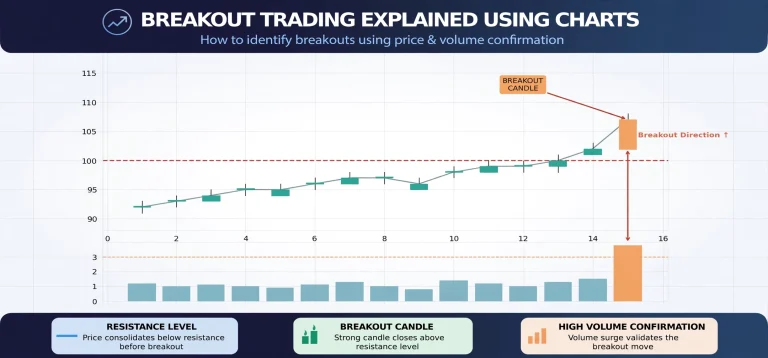
While fundamentals determine what to buy, technical analysis often determines when to buy or sell. Institutional trading desks use price action, volume patterns, and chart structure to time entries and exits without disturbing market prices.
Order Execution and Liquidity
Because institutional orders are large, poor execution can move the market against the investor before the full position is even filled. To manage this, institutions often break large orders into smaller pieces using algorithms such as VWAP (Volume Weighted Average Price) or TWAP (Time Weighted Average Price) strategies, spreading trades throughout the day to minimize price impact.
Reading Market Structure
Institutional traders study support and resistance zones, volume clusters, and momentum shifts to identify optimal entry points. If you want to understand this process from a practical standpoint, our guide on How to Read Stock Market Trends Like a Professional Trader breaks down the core techniques used to interpret price behavior.
Step 5: Alternative Data and Sentiment Analysis
In recent years, institutional investors have increasingly turned to alternative data sources to gain an information edge before it appears in traditional financial statements. This includes:
- Satellite imagery tracking retail parking lots or shipping activity
- Credit card transaction data to estimate real-time consumer spending
- Web traffic and app download analytics
- Social media and news sentiment scoring
- Supply chain and shipment tracking data
These non-traditional data sets allow institutions to validate or challenge their fundamental thesis before quarterly earnings are officially released, giving them a potential informational advantage over slower-moving market participants.
Step 6: Portfolio Construction and Risk Management
Individual stock analysis is only part of the process. Institutional investors must also decide how a position fits within the broader portfolio.
Position Sizing
Position sizing decisions consider conviction level, volatility of the stock, correlation with existing holdings, and overall portfolio risk budget. A high-conviction idea in a volatile stock may still receive a smaller allocation than a lower-conviction idea in a stable, less correlated position.
Diversification and Correlation
Institutions actively monitor correlation between holdings to avoid unintended concentration risk. Even if two stocks are in different sectors, they may move together during periods of market stress, and institutional risk teams account for this when building the final portfolio.
Step 7: Ongoing Monitoring and Rebalancing
Institutional analysis does not stop once a position is opened. Analysts continuously track earnings reports, regulatory filings, macroeconomic shifts, and competitive developments. Regulatory disclosures filed with agencies such as the U.S. Securities and Exchange Commission are routinely reviewed to catch material changes in a company’s financial condition or ownership structure. Positions are rebalanced periodically to reflect updated conviction levels, changing valuations, and shifts in the broader macro environment.
Case Study: How a Typical Institutional Research Cycle Unfolds
To understand how these steps come together in practice, consider how a large asset manager might approach a new potential holding. The process usually begins months before any capital is committed, and it rarely follows a straight line — ideas are tested, challenged, and often discarded before a single share is purchased.
Idea Generation
New investment ideas at institutional firms come from multiple sources: screening tools that flag statistical anomalies, sector analysts noticing a shift in industry dynamics, quantitative signals, or even conversations with company management at investor conferences. Idea generation is treated as a continuous process rather than a one-time event, with dedicated teams responsible for surfacing candidates worth deeper investigation.
Deep-Dive Due Diligence
Once an idea passes initial screening, a lead analyst is typically assigned to build a full investment thesis. This includes constructing a detailed financial model, interviewing industry experts or former employees through expert-network calls, comparing the company against direct competitors, and identifying the specific catalysts that could move the stock over the next 12 to 24 months. Analysts also actively search for reasons the thesis might be wrong — a practice sometimes called “red-teaming” the idea — to stress-test assumptions before presenting to the investment committee.
Investment Committee Review
Before capital is deployed, most institutions require the analyst to present the thesis to an investment committee composed of senior portfolio managers and risk officers. This committee challenges assumptions, questions valuation inputs, and evaluates how the position fits within the fund’s existing risk exposures. Only after this internal debate does a position typically get approved, and even then it is usually built gradually rather than all at once.
The committee doesn’t approve stocks — it approves theses. A position only earns capital once the reasoning behind it has survived being challenged from every angle.
The Role of Benchmarking in Institutional Decisions
Unlike many individual investors who simply aim for positive absolute returns, institutional portfolio managers are usually measured against a benchmark index, such as the S&P 500 or a sector-specific index. This benchmarking requirement fundamentally shapes how institutions analyze and select stocks.
Relative Performance Pressure
Because performance is judged relative to a benchmark, institutional managers must consider not just whether a stock will rise, but whether it will outperform the broader index or peer group. This can lead to different decisions than a retail investor might make — for example, an institution might hold a stock they view as only moderately attractive simply because avoiding it entirely would create a large deviation from the benchmark, known as “tracking error.”
Active Share and Conviction
Some institutional strategies aim for high “active share,” meaning their portfolio looks meaningfully different from the benchmark index, reflecting high-conviction stock-picking. Others run more benchmark-hugging strategies with lower active share, prioritizing consistency over the possibility of large outperformance. Understanding where a fund sits on this spectrum helps explain why different institutions can reach very different conclusions about the same stock.
How Institutional Behavior Affects Market Prices
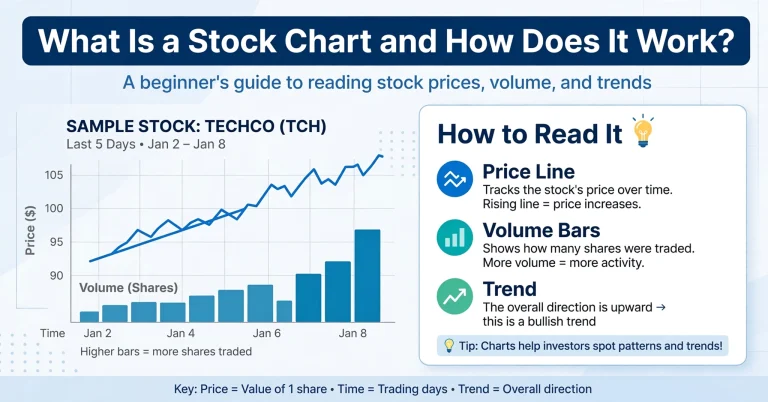
Because institutional investors control such a large share of trading volume, their collective behavior often shows up directly in price and volume patterns — patterns that individual traders can learn to recognize.
Volume Spikes and Accumulation
When institutions begin building a position, it often shows up as sustained, elevated volume over several sessions rather than a single dramatic spike. This is sometimes referred to as “accumulation,” and traders who study volume alongside price action can sometimes identify these phases before a larger move occurs.
Earnings Season Repositioning
Institutional portfolios are frequently adjusted around quarterly earnings season, as new financial data forces analysts to update their models and theses. This is one reason why earnings season often brings a noticeable increase in volatility and trading volume across the broader market, as thousands of institutional models are updated almost simultaneously.
Common Mistakes Institutions Try to Avoid
Institutional research processes are, in part, designed specifically to avoid a set of well-documented behavioral mistakes that can hurt investment returns. These include:
The committee-based approval process, formal risk modeling, and requirement to document a written thesis are all designed as safeguards against these common pitfalls — structures that most individual investors do not have built into their own process by default.
Key Differences Between Institutional and Retail Analysis
| Aspect | Institutional Investors | Retail Investors |
|---|---|---|
| Research Depth | Multi-analyst teams, proprietary models | Often self-directed, limited resources |
| Time Horizon | Typically longer, strategy-dependent | Often shorter-term or reactive |
| Execution | Algorithmic, phased order execution | Single market or limit orders |
| Data Access | Alternative data, direct management access | Public data and news sources |
| Risk Controls | Formal VaR and stress testing | Often informal or absent |
Practical Takeaways for Individual Investors
While retail investors can’t replicate every resource available to institutions, several principles from institutional analysis can still be applied on a smaller scale:
- Combine fundamental research with price action rather than relying on one method alone
- Pay attention to sector trends and macro conditions before picking individual stocks
- Size positions based on risk, not just conviction
- Avoid emotional, reactionary trading during short-term volatility
- Continuously monitor positions rather than treating research as a one-time exercise
Explore more market-reading guides and tools on ucharts.org to build your own research process.
Conclusion
Institutional investors approach the stock market through a disciplined, multi-step process that blends macroeconomic research, fundamental valuation, quantitative modeling, technical analysis, and strict risk management. While individual investors operate with fewer resources, understanding this institutional framework can help sharpen personal research habits and provide useful context for interpreting broader market movements. Markets often move in the direction institutional capital is flowing — recognizing the process behind those decisions can make it easier to understand why prices behave the way they do.
This article is for educational purposes only and does not constitute investment advice. Always conduct independent research or consult a licensed financial advisor before making investment decisions.